Wednesday, February 16, 2011

VTA accepts Clipper

VTA today formally accepts Clipper for payment.

Some Clipper tips:
E-cash and monthly passes can be loaded onto Clipper cards. With e-cash you pay one way fares. There's no day pass option at this point. If you want to ride light rail or the bus all day you should buy the light rail excursion pass or day pass with cash.

Transfer privileges automatically apply when transferring to VTA from AC Transit, BART, Caltrain, or SamTrans. There's no transfer privileges with Highway 17 Express or MST if you pay with Clipper.

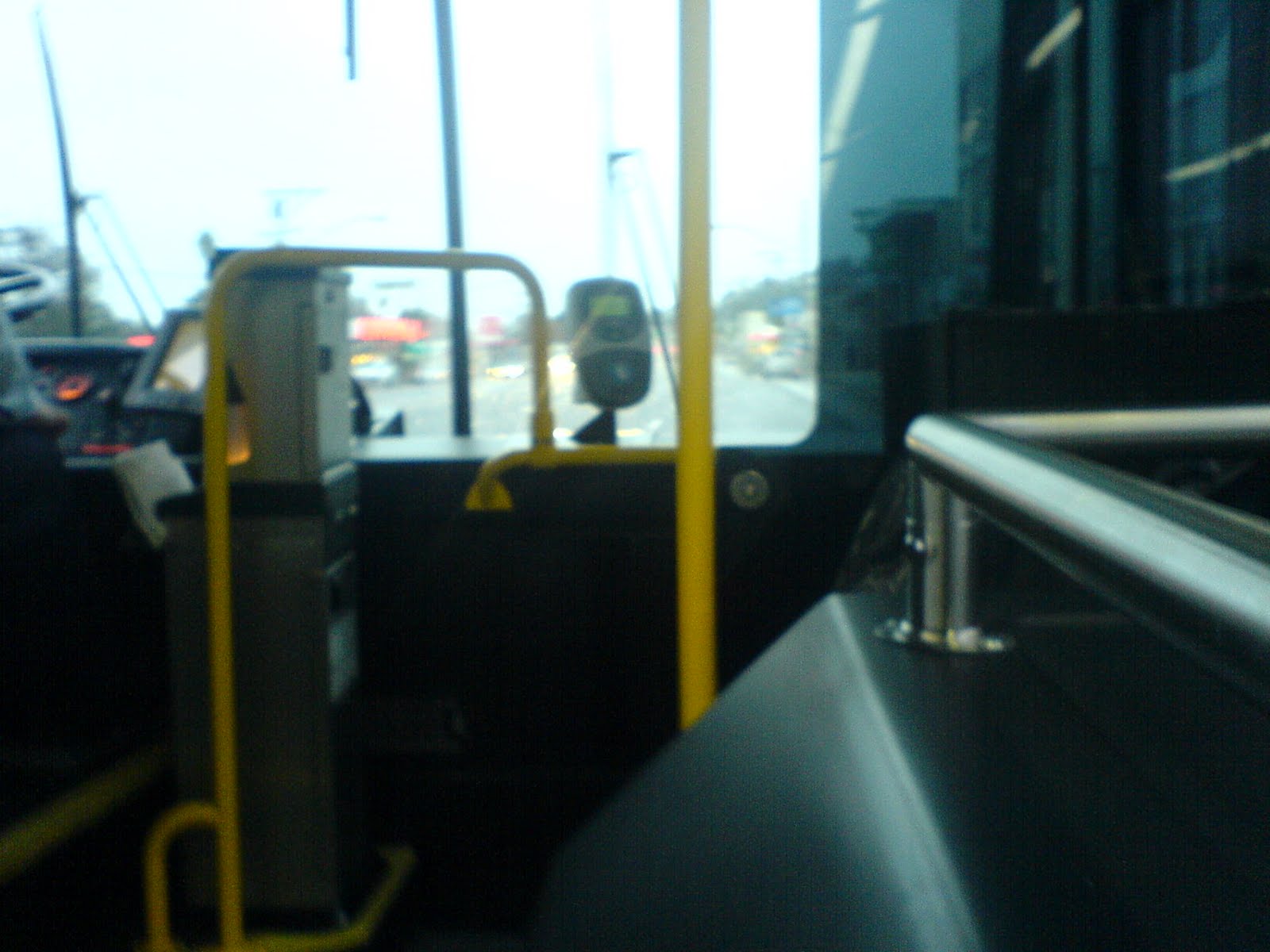
To ride the bus you basically place the card on top of the blue logo on the Clipper reader. The reader is located in front of the bus to the right of the fare box.

To ride light rail you place the card on top of the blue logo on the Clipper reader at the light rail station. Once your card is approved (green light), you can ride light rail for the next 2 hours.

If you transfer between light rail you don't need to "tag" your card again. If you do so you will pay another fare, even if you have paid for light rail less than 2 hours ago.

The Clipper readers at light rail stations are generally located next to the ticket machines. That means that they are located on the platform at street level stops, and located at the station entrances for Hwy 87 stations. Some ticket machines will not have the Clipper reader next to them.

At the downtown San Jose light rail stops, only one Clipper reader is available on each street for each station. The reader is located at the front end of the station (north end on 1st St, south end on 2nd St) between the raised platform and the ticket machine.

What is not clear at this point is whether you must tag (that means if you don't you get a citation) before you board the light rail if your card has a monthly pass. The FAQs on VTA and Clipper sites say that you need to. On the other hand, you don't need to do that on Caltrain. Because of the number and placement of the Clipper readers at the light rail stations, having tag on every time with a monthly pass is a problem. If you ride, say the 82 to the light rail station on 2nd Street and the light rail pulls in, you won't have time to walk to the front of the front car to tag the card and get on.

The Clipper readers for light rail and Caltrain all look the same, which can be confusing at some intermodal stations especially San Jose Diridon. At that station, Clipper for light rail is located on the light rail platforms only. Readers located anywhere else (inside tunnel, inside station building) at that station are for Caltrain only. At Tamien, light rail readers are located next to VTA machines. Caltrain reader is located next to the Caltrain machines.

You need a youth or senior Clipper card to pay for any youth or senior fare. Standard cards are restricted to pay for adult fares only. Getting one of these cards is not convenient, you basically need to bring a proof of eligibility to a VTA office and apply in person, and wait to receive the card in the mail.

If you have a RTC Discount Card, which is necessary to buy a VTA senior/disabled monthly sticker, you already have a senior/disabled Clipper card. You can call Clipper 877-878-8883 to activate the Clipper account and start loading money or pass. The older RTC card with Translink logo also works on Clipper (Translink and Clipper is basically the same, just a change in name).

If you choose to pay online you may need to wait 5 days for you new purchase to be loaded. If you pay at the VTA office or Walgreens your card is loaded immediately. The reason for the delay is that, unlike credit cards, the reader does not immediately link to the network to validate your card. The readers get your payment information only by downloading at the end of each day through a wireless network at the bus yards. Once your card is validated then you're good for subsequent transactions.

Thursday, February 10, 2011

Caltrain proposes drastic cuts

Last week, the Caltrain JPB approved a set of meetings on drastic service cuts which includes elimination of all off peak service, weekend service, Giants service, Gilroy service, and service at some stops like Burlingame, San Antonio, Lawrence, College Park, and Santa Clara stations.

If these cuts go forward, the crown jewel of Peninsula and South Bay transit would basically become another Altamont Commuter Express. The service Caltrain proposes is a giant step backward compared to the service Southern Pacific provided in the late 70s and early 80s, the time when SP proposed to eliminate passenger service and the state (with Jerry Brown as governor) rescued the service from extinction.

What we lack here is a political leadership to get Caltrain out of the crisis. The Caltrain's $30 million deficit is primarily caused by SamTrans' (which manages Caltrain) structural deficit. While the SamTrans/Caltrain management doesn't want to see drastic cuts on Caltrain, yet the same folks on their SamTrans role expressed nothing but hopelessness in preventing and addressing the situation. VTA, which has been cold to Caltrain for many years, have at least proposed ideas to address the problem. Could SamTrans and Caltrain be in a better financial shape if the agency were to tackle its financial problem more aggressively like VTA did several years ago?

Caltrain, which is funded by the three county trifecta, is very weak in financial stability yet delivers service better than the agencies themselves. Caltrain's farebox recovery is dramatically better than the local agencies. Over the last ten years, Caltrain ridership has gone up while some bus systems like SamTrans has declined. Also, none of the stations on the VTA light rail system has higher boardings than Palo Alto, Mountain View, or San Jose Diridon Caltrain stations. College Park station, a Caltrain stop with only 4 trains per day, has a higher boarding count than the Bayshore/NASA light rail stop, which is served by many more trains 7 days a week. Santa Clara station, which is included on the Caltrain chopping block, has more boarding than the average of all VTA light rail stations. Unfortunately it appears that productivity is not a deciding factor for transit funding.

The success of Caltrain is not just the speed of the trains and the locations of the stations, but the fact that the same trains travel through the three counties serving different ridership markets. For instance, some people boarding in San Jose get off in Palo Alto and others get off in San Francisco. If somehow SamTrans has to cut funding and Caltrain has to reduce service north of Palo Alto, then the remaining trains will not be as productive.

Fixing Caltrain in the long run requires us to change the way our transit institutions work, and get rid of the trifecta that threatens the existence of otherwise a productive transit route. Taxpayers don't win under any service cut scenarios Caltrain is proposing.

Monday, January 24, 2011

The Caltrain summits

A lot of attention is focusing on Caltrain given the budget situation and the possibility that most of the train service could be eliminated.

SVLG held a summit last Friday at Stanford mostly attended by representatives from businesses and governments. This Saturday, "Friends of Caltrain" will host a "grassroots" summit in San Carlos. The goals of both summit are to find solutions to the Caltrain funding problem and to the rally support.

The Caltrain situation is bring together political factions that have been at odds. SVLG, as we know, is behind the BART project and also supports high speed rail. On the other hand, cities like Palo Alto and Burlingame are lending support to preserve Caltrain service as they fight against the High Speed Rail Authority.

Regardless of their true intentions, it is clear that cities and businesses will hurt if Caltrain service were to be eliminated or curtailed significantly. The high tech businesses in the valley rely on Caltrain to bring employees that prefer to live in San Francisco. The cities up and down the Peninsula take advantage of Caltrain to promote downtowns and transit oriented developments. Employers like Stanford University depend on Caltrain to reduce traffic and cut down the parking spaces that otherwise would be required.

Some people, perhaps blinded by their pure hatred against high speed rail, think that Caltrain should be eliminated to kill any chance for high speed rail. At the same time, some high speed rail supporters suggest that high speed rail could be completed sooner if Caltrain were eliminated. But as history shows (Caltrain was closed on weekends from 2002-2004), there's no transit that can truly substitute Caltrain. There's also no room to add lanes on 101 without tearing down homes.

Given Caltrain's performance and potential, Caltrain needs and deserves a strong regional coalition in order to survive the financial crisis. If done right, Caltrain could be a catalyst for a more integrated and efficient regional transit system. If groups on both sides of the high speed rail issue can work together to save Caltrain, it is possible that they could agree on a high speed rail scenario that is integrated, achievable, and does not create unnecessary fear.

Location: SamTrans Auditorium,
1250 San Carlos Avenue, San Carlos (near Caltrain)
Date: Saturday, January 29, 2011 Time: 8:30 am to 2:30 pm.

Friday, January 07, 2011

Clipper, Caltrain, and VTA

At yesterday's Caltrain JPB meeting, staff announced that Caltrain will stop selling paper 8 ride tickets at the end of this month and paper monthly passes at the end of February. Caltrain delayed the mandatory transition for monthly passes because VTA has yet to accept Clipper but is expected to do sometime next month.

For VTA, only monthly passes and e-cash for one way fares will be offered on Clipper. Day passes and annual passes will not be available for now. The only realistic solution for day passes on Clipper is the implementation of a daily fare cap. Otherwise all other alternatives are inconvenient (either putting cash at the farebox to activate day pass on Clipper, which is a process already implemented on LA's bus system, or use Clipper e-cash to buy a paper day pass).

The current transfer policies with Santa Cruz Metro and MST, which are outside MTC's jurisdiction, present a problem with the mandatory Clipper transition for Caltrain and VTA. On Highway 17 Express, the cost of a day pass is $4.00 with a VTA day pass or a Caltrain monthly pass. Also, riders with a VTA express monthly pass or a Caltrain monthly pass with 3 zones or more can ride MST free. Highway 17 Express and the MST 55 line are partially funded by VTA.

Currently the other agencies cannot read Clipper cards for valid passes and honor the transfer discounts. Until something's changed, a transition to Clipper only tickets would mean a de facto fare increase (and a substantial one) for people who rely on these inter-agency transfers.

Is it feasible to stop the mandatory transition? At this point MTC does not have a plan to transition all bus agencies to Clipper within its jurisdiction. There's no Clipper version of BART Plus ticket (which can be used as a bus pass with a number of local transit agencies, except AC Transit) available, even through BART and Muni fully accept Clipper. On one hand, it is possible that sales of paper passes be continued on a limited basis for those who intend to transfer to H17 or MST. On the other hand, people who bought passes on Clipper but suddenly want to ride H17 or MST would find themselves having to pay more.

Besides H17 and MST, VTA also has transfer policies with AC Transit and SamTrans. Under the existing policies, VTA and AC Transit honor each others monthly passes at shared transfer points (including DB bus for local credit). Between SamTrans and VTA, either passes (also include VTA's day pass) are valid anywhere in Menlo Park and Palo Alto. With Clipper, transfers to VTA will be free within 2 hours after boarding another agency's bus with Clipper (no e-cash deducted).

Tuesday, December 28, 2010

SamTrans quietly launches Clipper


No fanfare, no web site announcement, no whatever, SamTrans quietly accepts Clipper card for payment by uncovering the Clipper readers, which has been installed on buses for several months.

For now, only e-cash (without discount) and monthly passes are available on Clipper for SamTrans. Occasional SamTrans riders will still need to buy bus tokens from retailers like Safeway in order to receive a 20% discount. Ironically, Muni offers a 10-ride "ticket book" on Clipper, which costs $20 and provides no discounts from cash. AC Transit also had 10-ride paper tickets which provided no discounts. These tickets were eliminated when the agency fully transitioned all passes to Clipper.

For Clipper, SamTrans instituted a policy on line KX that require SF-bound riders who use Clipper to tag the card when boarding and again exiting in SF. Because line KX is a mixed local and express service, riders only pay the express fares if they ride north of SFO. The second tag in SF is basically to charge the card from local (when they board south of SFO) to express fare. It is possible for someone to evade the express fare northbound by exiting quickly (or through the back door) and not tagging the second time. It would be interesting to find out how will that policy be actually executed on the buses.

On Golden Gate Transit and Caltrain, the highest possible fare is deducted on the first tag, so any passenger who ride for a shorter distance has an incentive to tag the second time to get a refund.

Meanwhile, SamTrans will be introducing new fare boxes in the next few months. The new fare boxes will be able to accept and issue magnetic strip cards. One of the features planned is to provide change on a card for riders who feeds larger bills into the fare box. The rider can use the card to pay for fares in the future or possibly redeem the card for cash at the transit office.

Another feature also planned with the introduction of new fare boxes is day pass. Day pass, already available on VTA, Santa Cruz Metro, MST, and countless other agencies, is a convenient way for occasional riders and visitors to pay and use the system. Day pass also reduces transfer penalties.

While SamTrans staff recognizes the benefits of day pass. They have been hesitant on implementing the pass until they first introduce the new fare boxes, which can issue day passes automatically. What they don't want is to follow VTA's footsteps in making and distributing preprinted day passes.

The day pass is planned to cost $6, exactly the same as VTA. However, the pass is expected to be available for local fares only. Riders will need to pay an upgrade for higher fare routes. Staff is planning to introduce the pass by the end of next year, after they roll out new fare boxes and conduct public meetings and "analysis" for something that will obviously benefits riders.

What will also be helpful is to have the day pass be introduced on Clipper as a form of a fare cap. So if someone who has paid $6 on SamTrans rides in a day, all SamTrans rides will be free for the rest of day. Another thing SamTrans could do is to make all e-cash fares $1.60 for Clipper riders.

Thursday, December 02, 2010

VTA January 2011 bus changes and Caltrain weekend Baby Bullet

On January 10, 2011, VTA will implement a number of bus service changes:

Schedule changes: 13, 14, 17, 18, 19, 22, 23, 25, 27, 32, 34, 35, 42, 46, 48, 49, 51, 57, 60, 61, 62, 66, 68, 71, 81, 88, 103, 120, 330, 522, DASH

11 - Frequency will be adjusted to every 35 minutes. VTA says the actual travel time is longer than previously estimated.

64 - Bus will run on 13th and Julian streets in both directions between Santa Clara Street and McKee Road. The City of San Jose is converting both Julian and St. James Streets from one-way couplets to two-way streets.

180 and 181 - Line 180 will become a weekday only service between Fremont and Milpitas. Line 181 will provide service on weekends with a stop at the Great Mall. There will be no weekend VTA service along Mission Blvd in Fremont. Riders along Mission Blvd can take AC Transit local bus 217 to Great Mall.

VTA says the 181 routing along 880 and Stevenson is faster than the 180 along 680 and Mission. Switching the routes on weekends will help keep buses on time.

63 - Last July VTA added a southbound trip at night due to rider request. However, ridership numbers are not meeting minimum ridership standards (9 riders during SJSU session. Standards call for 15 riders). VTA is planning to cut that trip next July if ridership does not improve.

On January 1, Caltrain will reduce weekday service (4 late morning/early afternoon trains) and raise fares. At the same time Caltrain will add 4 weekend Baby Bullet trains on a trial basis until March. The new weekend trips will cut the travel time between San Jose to San Francisco by more than 30 minutes compared to local service. Trains will also stop at Millbrae, San Mateo, Hillsdale, Redwood City, Palo Alto, Mountain View, and Sunnyvale.

If Caltrain's partners (which includes Muni, SamTrans, and VTA) decide not to further cut funding next year, the weekend express service may continue if weekend ridership grows by 10%. See schedule below:

Tuesday, November 23, 2010

VTA's new hybrid buses

Earlier this month VTA rolled out its new hybrid buses. The new buses can be found on route 66.

The hybrid buses look pretty much like the older buses VTA bought 8-9 years ago. In comparison, SamTrans new buses come with a new style and paint scheme. VTA actually has a pretty good paint scheme for the small community buses, but for some reason it is keeping the old scheme on the hybrids.

The hybrid buses have a "hump" on the rear end.


The new buses are noticeably different from the older buses on the inside. The new buses have new wheelchair tie-ins to reduce driver workload, along with new seats.


The new buses also have a wider rear door.

Wednesday, November 10, 2010

AC Transit and union reach agreement, prevent weekend cuts

Today AC Transit announced that an arbitration panel has reached a decision between the agency and the union representing the agency's drivers and mechanics. The decision finally ended the labor dispute that began in summer which resulted in lawsuits, driver sickouts and a threat to discontinue most of overnight and weekend service.

The binding decision essentially requires union members to contribute to their health and retirement plans. The decision also require changes to work rules. Overall it would cut AC Transit deficit by $38 millions over three years.

Given the declining state and local revenues, AC Transit sought savings from the new labor contract. After an unsuccessful effort to reach an agreement with the union, AC Transit board voted to impose the contract. The union fought back by bring the issue to court. The court agreed with the union by striking down the new contract. Meanwhile the drivers informally staged a sickout, which caused missed runs and more crowded buses.

If AC Transit were not able to realize labor savings, AC Transit would have to further reduce service to cut costs. After two major service cuts earlier this year, AC Transit was planning another cut in December, which would cut most overnight and weekend service. After this decision, AC Transit cancelled the December cuts but warned that additional cuts may be required sometime next year.

In this economy, it is counter-productive for transit unions refusing to make concessions to protect service and jobs. In San Francisco, where Muni drivers' pay was set by the city charter to be the second highest in the country (which essentially meant automatic pay raises regardless of the economy), city voter overwhelmingly approved a ballot measure last week to remove the wage provision from the city charter. Earlier in the year, Muni drivers twice voted down proposals to increase employee health and retirement contributions while maintaining charter mandated pay raises.

Thursday, October 28, 2010

Is Podcar another false promise?

Since the concept of a people mover at San Jose Airport was approved with Measure A ten years ago, the project eventually proved to be too expensive to build and operate, not very useful, and ineffective. Nowadays, the city is hosting a Personal Rapid Transit conference, in which PRT proponents are saying that San Jose Airport could have a people mover-like system without the price tag.

PRT, or pod car is a concept that has existed for decades, with the promise of fast, frequent, and non-stop service. Renderings of such systems often feature small cars hanging off a slim elevated track. What PRT doesn't have is a track record of daily revenue service. The PRT proponents are desperately looking for sponsoring cities, along with funding, to prove their concepts.

San Jose politicians are trying to look for a "creative" solution to a superficial problem and while dismissing realistic solutions. The simple way to bring rail to San Jose airport is to extend the light rail system from 1st Street into the airport. Light rail only needs to extend a mile to serve both terminals A and B. Light rail already serves Downtown San Jose and connects with Caltrain, Amtrak, ACE (and possibly BART in Milpitas and high speed rail at Diridon Station). Unlike peoplemover or pod car, no separate maintenance facility is needed for light rail.


View Untitled in a larger map

One has to wonder why San Jose is pretending to be progressive on transportation by promoting PRT while actually moving backwards by ignoring light rail. Cities like Portland and Baltimore have light rail located directly at the terminal. Sacramento and Los Angeles are planning to extend their light rail systems to airport as well.

VTA light rail is drawing fewer riders than similar systems in other cities because the light rail lacks destinations that are not convenient to drive. If the light rail can directly serve the airport, it will change how the system is used and perceived. While many people have brought up the idea for many years, it was repeatedly ignored by the City of San Jose and VTA (which the City has a controlling stake on).

While the PRT proponents welcome the attention received in San Jose, it is another loss of opportunity for a more cost effective transportation. Even if the PRT has proven to be a reliable technology, it will still be slower and less convenient for riders than extending light rail directly to the airport. Even if PRT has applications beyond the airport, its proclaimed advantages can easily be met by automobile and bike sharing, along with better bike and ped infrastructures.

Monday, October 04, 2010

First day of express light rail

With little fanfare and limited press coverage (compared to Caltrain's Baby Bullet a few years ago), VTA rolled off its express light rail trips. The new trips go from Santa Teresa to Baypointe and do not stop between Ohlone/Chynoweth and Convention Center stations. The cars used for the express trips have special blue and orange wrap and also have free wifi.


VTA Boardmember Sam Liccardo and general manager Michael Burns were on the platform at Ohlone/Chynoweth waiting for the first train to arrive from Santa Teresa. Other VTA top brass were there as well. There were no speeches nor ribbon cutting. However some riders were treated with free Red Bulls and newspapers. Liccardo boarded the first northbound express train presumably heading to the City Hall.


When a northbound express train arrives, another one deadheads to Santa Teresa.


At other stations, signs are in place to warn others about express trains that won't stop.


VTA is not accepting Clipper... yet.

The express light rail is an experiment whether operational changes can bring in additional riders, similar to how the Baby Bullet has transformed Caltrain. MTC is conducting a regional study of transit sustainability and recently found that Caltrain has raised ridership and improved cost effectiveness compared to most transit agencies (including VTA) because of the Baby Bullet. Caltrain is now considering providing weekend Baby Bullet service, despite deficit, to draw more riders.

The light rail system however is very different from Caltrain, so the opportunities to speed up service are limited. Let's see whether skipping stops and having onboard wifi will help draw riders.