SamTrans
SamTrans has two holiday gifts. The first is the new buses. The new buses are low floor and have a new paint scheme to match the BRT look. The buses are somewhat similar to what it bought in 2004 except it has more seats due to the new seat designs.
The other holiday gift is the service reduction effective on December 20. SamTrans will eliminate all express service to downtown SF except KX, and that KX will run hourly. Bus on El Camino will also have reduced frequency on the weekends.
Currently, SamTrans buses that serve El Camino leave Palo Alto every 15 minutes on weekdays and weekends. After December 20, some buses will leave 30 minutes apart on weekdays (because KX trips got cut), and on weekends, there will be 40 minute service gaps throughout the weekend (hourly KX will not fill the service gaps left by 40-minute 390). Because VTA will continue to run the 22 and 522 service every 15-minutes, expect a crowd in Palo Alto waiting to transfer from VTA to SamTrans.
VTA
Tomorrow VTA will hold a board workshop to address the agency's "structural deficit," which was caused partly by further declines in sales tax revenue and elimination of state funds (also suffered by most transit agencies in California), as well as VTA's mismangement and dishonesty in regards to its financial projections.
Among the recommendations, the VTA board is asked to direct $25 million in 2000 Measure A funds from future bus purchases to operations and to establish an ad-hoc committee (similar to what VTA did in 2003) to develop future recommendations. Those recommendations could involve changes in healthcare and pension benefits, new funding sources, and alternative service delivery models (contract operation?).
Translink
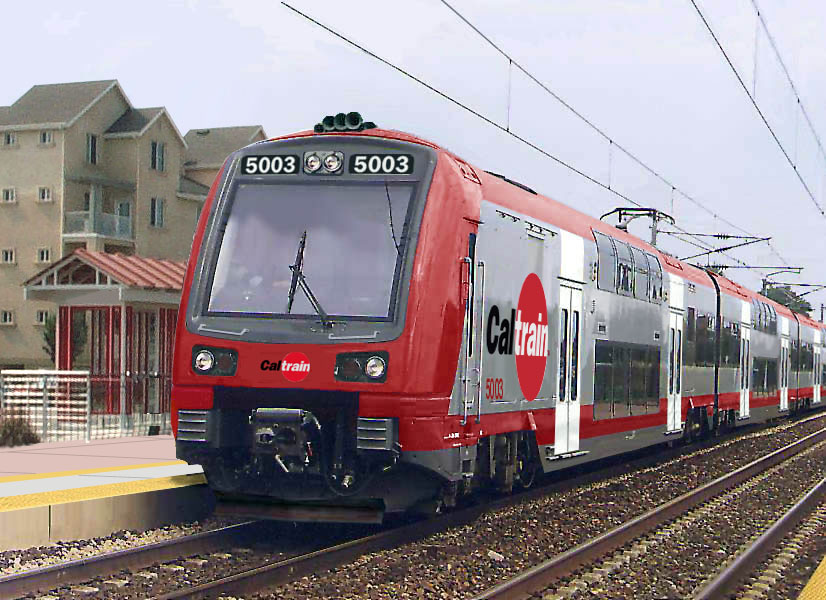
After years of planning and development, the Translink smart card payment system is coming to VTA and SamTrans sometime next year. Earlier this year, Translink has been implemented on BART and Caltrain. The eventual goal for Translink is to replace most of the current fare media, which means when it is fully implemented, monthly passes for VTA and Caltrain would be available on Translink only, and that paper passes would be discontinued. AC Transit already took the lead by converting transbay bus passes to Translink only.
However, when it is implemented at SamTrans and VTA, Translink might no longer be called Translink. MTC is recommending changing its name to "Clipper," to evoke a historic connection between Clipper ships and the development of San Francisco.
VTA light rail COA
If you missed the meeting in Mountain View, a VTA staff recorded the meeting and it is available for your information.
Showing posts with label 2000 Measure A. Show all posts
Showing posts with label 2000 Measure A. Show all posts
Wednesday, December 09, 2009


Saturday, October 31, 2009
Sales tax crash
Is VTA going down the same path as the transit agency in Orange County, in which it is planning one massive bus cuts after another?
At the beginning of the year, VTA said that no cuts were planned. A few months later, VTA finally told the board that it needs to raise fares and cut service. Over the summer months, worsening sales tax revenue prompted the board to move up the fare increases from July 2010 to October 2009.
Unfortunately, that may not be the end of it. The Mercury News is reporting that VTA is facing an operating deficit of $98 million over the next year. A combination of fare increases, service cuts, layoffs, reduction in employee benefits, and more are on the table.
The prospect of another bus cuts is a terrible news to those who fought against those proposals last summer. Cuts that were withdrawn by staff due to community oppositions could come back again. Furthermore, many of the routes that received improved service in January 2008 and July 2009 could very much have their frequency reduced to the original level.
It is possible to preserve the bus service by diverting additional operating funds from the 2000 Measure A. Back when that tax was approved in 2000, Measure A funds could be used for operations. In 2003, when VTA was planning a 21% service cuts, transit advocates lobbied VTA to borrow Measure A funds (the tax was supposed to begin in 2006) to preserve service. Presently, about $30 million from Measure A supports bus and light rail operation every year. The irony is that funding from Measure A was supposed to pay for bus expansion. However, since sales taxes have been hit so hard over the years, Measure A funding now supports current bus operation (way below year 2000 level) that otherwise would've been discontinued.
According to the Mercury News, Michael Burns insists that the BART project is not impacted. Guess what? Sales tax reduction for transit operation (1976 sales tax) also applies to the 2000 Measure A to the same degree. If additional Measure A funds were to be diverted for operation, there'll be even less for capital projects.
However, we probably won't be able to get a full financial picture on capital projects since Burns has informally and unilaterally adopted a policy to not talking about it. As long as he doesn't talk about it, he could keep Carl Guardino's myth alive. Even so, VTA is jealous that high speed rail is getting most of the public's attention and a strong funding momentum from the federal government. If these delusionals listened to transit advocates instead, VTA would've joined the high speed rail club with Caltrain Metro East.
Wednesday, June 03, 2009
Caltrain and VTA budget update
On the last night's Angie Coiro Show (6pm on KKGN 960am), Caltrain information officer Christine Dunn told the audience that Caltrain was able to narrow the budget gap to about $2 million. Because of that, Caltrain has withdrawn the plan to shutdown weekend and Gilroy service, which both proved to be very unpopular. However, Caltrain still plans to reduce midday service to hourly, increase parking fees, and increase fees for companies that buy Go passes.
Caltrain was able to narrow the budget gap by reducing administrative cost, redirect some federal funds for preventive maintenance, and stabilize fuel cost through fuel hedging.
Even though core Caltrain service may survive this year's budget cycle, the future is uncertain because of the lack of dedicated funding.
For VTA, the board is expected to approve the biannual budget at its meeting tomorrow night. The budget includes fare increases and reduction on paratransit services.
Due to the outcry from the disabled community, VTA has made some adjustments to the proposal that would cut paratransit service:
Although the revised plan has addressed some impacts on disabled riders (like those who need to travel for dialysis treatments), it will nonetheless a step backwards for an agency that has promised voters (through the 2000 Measure A) to improve paratransit service. Apparently, the VTA board was and still attached to Carl Guardino, who only considers paratransit to be a service just to attract voter support.
Caltrain was able to narrow the budget gap by reducing administrative cost, redirect some federal funds for preventive maintenance, and stabilize fuel cost through fuel hedging.
Even though core Caltrain service may survive this year's budget cycle, the future is uncertain because of the lack of dedicated funding.
For VTA, the board is expected to approve the biannual budget at its meeting tomorrow night. The budget includes fare increases and reduction on paratransit services.
Due to the outcry from the disabled community, VTA has made some adjustments to the proposal that would cut paratransit service:
- * Open returns - fare will be 4 times the regular paratransit fare (now twice). Only one open return can be requested per day, can only be done if space is available, among other restrictions.
- * Second vehicle - service will be retained and will be standardized to 4 times the regular fare (now 5 times).
- * Out of area service - service will be retained for an area within a mile beyond the 3/4 mile of a regular transit route. The premium fare for that area will be 4 times the regular fare. The current surcharge exemption in the South County will be eliminated.
- * Extended service hours - no changes proposed, which means there will be no paratransit service at the times when regular routes are not running.
Although the revised plan has addressed some impacts on disabled riders (like those who need to travel for dialysis treatments), it will nonetheless a step backwards for an agency that has promised voters (through the 2000 Measure A) to improve paratransit service. Apparently, the VTA board was and still attached to Carl Guardino, who only considers paratransit to be a service just to attract voter support.
Monday, June 01, 2009
Grand Jury finds VTA deceived voters...again
Earlier today, the Santa Clara County Grand Jury released its findings on VTA. What the Grand Jury discovered are pretty much what we've experienced over the years: that the VTA board was out of touch, VTA staff deceived voters, and VTA committees were ignored.
In many ways, VTA is like a communist state, where there cannot be an honest dialogue about major policies. Like a communist state, the legislative bodies are basically a rubber stamp for the supposedly all powerful, all knowing (and all self-serving) bureaucracy. Like a communist state, open discussions and dissents are not tolerated (like you can't still talk about the 1989 Tiananmen massacre in China today). Since Michael Burns believes in deceiving the riders, taxpayers, as well as those he who should formally seek advice from, one has to wonder who is his real boss.
VTA board was out of touch
Overwhelming Information. The voluminous board packets provided by VTA staff are frequently several hundred pages and contain information that require many hours of review by the board members before the meeting. Most board members work full time, which leaves them very little time to review the material in the packet. Some members stay up late at night to review the packet the night before the meeting. An exception is the City of San Jose, and Board of Supervisors, who have full-time, paid staff to review and distill the information. The other cities have part-time city council members with no support staff to help with VTA activities.
Staff Driven. All of the above issues contribute to the fact that VTA remains an organization that is frequently referred to as “staff driven.” Meeting agendas are prepared by VTA staff with input from the Board chairperson. In some cases, the chairperson follows a “script” prepared by VTA staff. Interviews with VTA board and committee members revealed that independent thinking was discouraged. Board members appear unwilling or unable to bring up items for discussion that are not prescreened by the staff. Hence, the VTA Board has frequently been referred to as a “rubber stamp” for policy proposals formulated by the VTA staff.
Both the Hay Report and the State Auditor Report recommended that the VTA Board make every effort to insure that new board members have transportation experience by appointing new members with previous transportation experience and reappointing members for multiple terms. Nevertheless the Mayor of San Jose recently appointed two new board members to represent San Jose who have no previous transportation experience.
VTA staff deceived voters
In June, 2006 the Board approved a comprehensive 30-year Revenue and Expenditure Plan for all projects identified in 2000 Measure A. During 2008, an update to this plan was scheduled. Sometime between June 19, 2008 and August 7, 2008, this update was cancelled and a decision was made to place an additional tax on the November, 2008 ballot.
(At the August 2008 meeting) Mr. Burns advised that the Light-Rail Extension to Eastridge “has not been stopped but that there is not enough money to complete all of the Measure A projects. . .” The Board “reaffirmed” its support for the project and recommended continuation of planning and design activities. However, property acquisition, utility relocation construction and completion of bid documents for construction contracts were not authorized.(At the same meeting) The staff presented a report to the Board supporting the sufficiency of the 1/8 cent tax proposal to cover the projected deficit in BART operating costs. The conclusion was based on a new 30-year sales tax revenue estimate. This report also provided sufficient information to update the revenue estimate in the new Revenue and Expenditure Plan.
The September, 2008, scheduled presentation of the update to the Revenue and Expenditure Plan was not delivered and never rescheduled... As a consequence, the public was not informed of the 2000 Measure A 30-year financial situation before the November 2008 election.
(In the draft June 2009 capital budget) A notable exception in the preliminary documentation is the absence of any funding for the light rail to Eastridge program which appears to have become totally dependent on unidentified federal funding.
Essentially VTA forwent short term job creation by shelving the light rail project, which was shovel-ready and has received community support.
If the 30-year Revenue and Expenditure Plan had been updated as planned, it likely would have shown that if the BART extension were built as planned, the remaining 2000 Measure A projects would require massive additional investment......If the updated Revenue and Expenditure Plan had been readily available to the public, Measure B might not have passed. The VTA had sufficient time and information to complete this update and made a deliberate decision not to publish it prior to the election.
Of particular concern is that VTA intends to start collection of the Measure B tax while only completing a shortened version of the BART extension to Berryessa...The ballot wording specifically refers to funding for the entire 16.1 mile BART extension.
VTA committees were ignored
Token committees. Both the Hay Report and the State Auditor Report took the VTA to task for poor use of its Advisory Committees... One of the key criticisms is that the Advisory Committees are presented with items to review only after the Board and/or staff has already made a decision... VTA’s attitude toward these committees has ranged from ignoring their existence entirely to retaliation for independent thinking.
Watchdog committee or lapdog committee?
The members of the CAC/CWC (2000 Measure A Watchdog committee) interviewed all stated they work for the VTA Board. This is a reasonable position for a CAC member, but not when acting in the capacity of a CWC member. The very nature of an “independent watchdog committee” is to “oversee” actions of the board for the citizens of Santa Clara County.CAC/CWC members are approved by the VTA Board, compromising independence of thought and action.Some CAC/CWC members are former VTA Board members, former Policy Advisory Committee members and/or former elected officials in the county. One interviewee referred to the committee as the “Board Retirement Plan Committee.”
(In 2007) The VTA Board has approved the exchange (swap) of approximately $107M of Measure A funds for use on non-Measure A programs in exchange for a payback from anticipated State Transportation Improvement (STIP) funds at a future time (basically swap funding programmed for the airport peoplemover project with highways).....As of June, 2008, approximately $9M of Measure A sales tax revenue had been spent on non-Measure A programs. At the same time, the 2000 Measure A program was over $361M in debt... There was no prior discussion or notification to the Citizen Watchdog Committee. The CWC was informed after the fact in a report from VTA staff.At its February 11, 2009 meeting, a discussion regarding the CWC’s responsibilities in this area was initiated by a CWC member and stifled by VTA staff in attendance by reminding the CWC members of the limitations in their responsibilities... following this meeting two members of the CWC resigned, leaving a total of five vacancies.
In many ways, VTA is like a communist state, where there cannot be an honest dialogue about major policies. Like a communist state, the legislative bodies are basically a rubber stamp for the supposedly all powerful, all knowing (and all self-serving) bureaucracy. Like a communist state, open discussions and dissents are not tolerated (like you can't still talk about the 1989 Tiananmen massacre in China today). Since Michael Burns believes in deceiving the riders, taxpayers, as well as those he who should formally seek advice from, one has to wonder who is his real boss.
Wednesday, March 25, 2009
MTC and VTA's misguided priorities
MTC recently delayed the adoption of the Transportation 2035 because of significant changes in revenue assumptions and cost changes. Regardless of what the initial expectation of big changes in direction to combat global warming, etc, it is still the MTC ususal political hack job meant to protect highway projects and wasteful rail expansions at the expense of transit service to those who need the most.
Ealier today, MTC met and staff presented recommend changes to the T2035 program. One of the major recommendations is to divert $2 billion of future High Occupancy Toll lane revenue to cover the shortfall in VTA's 2000 Measure A program.
That recommendation is more or less a temporary political/programmatic cover for VTA and the BART project considering that future toll lane revenue is largely uncertain. Basically MTC is predicting that it would collect as much from the HOT lanes as it does on all the 7 Bay Area toll bridges. Unlike toll bridges, HOT lanes are largely optional, and drivers have many more legal options for not using the toll lanes. However, it is not the unusual that promoters would overestimate the revenue to justify their pet projects.
The scary part, however is the $3.2 billion operating shortfall that VTA is expected to have for the next 25 years. According to the initial estimate last year, VTA would have no operating shortfall. The new estimate puts VTA as the transit agency with the largest operating shortfall in the Bay Area. Other agencies like Muni would have a $1.9 billion shortall, and AC Transit would have a shortfall of just $283 million.
Rather than to use new toll revenue to cover operating shortfalls like it has recommended for unfunded expansion projects, MTC instead complained about transit "overlapping" and encourages transit agencies to cut service and raise fares.
MTC pointed out that AC Transit, BART, and ferries all serve the transbay corridor, and that Caltrain, BART, and SamTrans serve the San Mateo-San Francisco corridor. Transit routes may appear to duplicate at first, but they all serve a purpose by taking commuters to where they want to go with the least inconvenience. Wasteful projects like BART-SFO extension assumed that most Caltrain passengers would simply transfer to BART at Millbrae, which did not happen. It is not the Caltrain riders fault that the slower and more expensive BART extension has failed to attract them, and that Caltrain and bus passengers do not deserve to have their service sacrificed because of poor transit planning.
MTC also complained about the inconsistency of senior and youth fare discounts across agencies. Currently some agencies provide more discounts than VTA and some provide very little. While it is desirable to have a common standard, MTC appears to recommend that these discounts be tightened to generate more fare revenue from youth and seniors. It is unconscionable to raise fares on those who can least afford when MTC has done little to protect transit operations and done to most to preserve wasteful projects.
MTC believes that VTA can cut $1.5 billion in operating cost for the next 25 years (and still leaves a shortfall of $1.7 billion). What service do you think VTA can cut now? For the past 9 years, VTA mostly reduced bus service. Last year, VTA was able to increase bus service on some routes by shortchanging riders on other parts of the system.
Friday, December 12, 2008
Things that VTA should have told voters about
At the VTA Board workshop yesterday, General Manager Michael Burns told what a lot of us have been suspected but was denied by the supporters during the Measure B campaign.
During the meeting, VTA also admitted that it would receive $2 billion less from the 2000 Measure A than what was projected earlier.
Basically Burns was saying that all the other projects would be off the table, even the airport people mover, a project that has no operating funds identified. The BRT project along Santa Clara Street, which replaced light rail as originally listed on the 2000 Measure A, is also at risk.
Although some think that the bickering should stop, the bickering will never end as long as VTA has to deploy deceptive tactics to get a tax passed. Burns said that BART was approved by voters twice, but we all know that VTA did not put other projects on the ballot twice for voters to approve. VTA controlled which projects go onto the ballot, controlled how much tax to collect, and controlled what information released relevent to voters. VTA has become a Russian style "democracy."
Given the election results in Los Angeles and the North Bay, VTA could've been better off by being more honest.
"It's clear we can't see the BART project getting ($750 million in federal) money if we're spending our local money on other projects," Burns said in an interview earlier this week. "That just doesn't add up."
During the meeting, VTA also admitted that it would receive $2 billion less from the 2000 Measure A than what was projected earlier.
Basically Burns was saying that all the other projects would be off the table, even the airport people mover, a project that has no operating funds identified. The BRT project along Santa Clara Street, which replaced light rail as originally listed on the 2000 Measure A, is also at risk.
Although some think that the bickering should stop, the bickering will never end as long as VTA has to deploy deceptive tactics to get a tax passed. Burns said that BART was approved by voters twice, but we all know that VTA did not put other projects on the ballot twice for voters to approve. VTA controlled which projects go onto the ballot, controlled how much tax to collect, and controlled what information released relevent to voters. VTA has become a Russian style "democracy."
Given the election results in Los Angeles and the North Bay, VTA could've been better off by being more honest.
Tuesday, October 07, 2008
The same false promises with Measure B
One thing that's true in Santa Clara County is that it is almost impossible to have a sincere, rational discussion about transportation. The delusionals are so obsessed about the BART brand that they're forgetting the fact that it is just a very expensive, non-standard train.
Measure B is all about them being delusional. 8 years ago, Carl Guardino at least tried the featherbed the 2000 Measure A with other projects to make it looked more equitable and fair. This time, with all the VTA failures, all they could sell is a BART brand and a BART delusion without mentioning "VTA" and "new tax." (try to search both phases in the article and you'll see.)
With little credibility left, the delusionals are trying to associate the BART project with all the poll-tested, feel-good buzz words of the day.
Reduce dependence on foreign oil? Reduce greenhouse gas emissions? As Scott Herhold wrote earlier, whatever fuel saving benefits are minimal: "By my back-of-the envelope figuring, the proponents' current estimate of 12,000 gallons of gas saved a day is only three-tenths of 1 percent of total Bay Area usage."
By the way, Caltrain already uses more diesel fuel than that everyday. VTA can do more to reduce oil dependence and emissions by spending just a fraction of the cost to electrify Caltrain. Instead, VTA/SVLG continue to delay the project and trying to mislead others by blaming San Francisco.
A full rail car removes 200 cars from the road? The reality is that neither a BART nor a Caltrain car has that much seating capacity. In fact, even with VTA's inflated ridership numbers, one out of three seats would be empty during the morning rush hours between Fremont and Milpitas. Also, more than half of the projected ridership would be diverted from existing buses and trains.
Of course we must not forget that the BART extension to Millbrae has failed to meet ridership projections and nearly bankrupted SamTrans.
One would wonder why these delusionals are hitting us again for another tax. 8 years ago, voters believed Guardino when he declared that the 2000 tax would be more than enough. After all these years, Measure B supporters could have chip in more of their own money if they really believed BART as a worthy form of investment. Instead, what they did was to shift more of the tax burden onto the residents in this county.
In 2003, Carl Guardino flat out rejected a proposal calling for a VTA payroll tax. If the employers wanted BART because it would somehow help them import more cheap labor from the East Bay, shouldn't they pay their fair share? After all, even a VTA-sponsored "economic study" of the BART project has indicated that workers from out-of-county would only spend about 5.7% of their income in Santa Clara County, mostly on their lunches.
Also, since 2005, SVLG has lobbied for legislation to exempt companies from paying sales taxes.
These days, there are too many false promises everywhere. It is time to have a sincere, rational discussion. Only a NO vote will help us get there.
Measure B is all about them being delusional. 8 years ago, Carl Guardino at least tried the featherbed the 2000 Measure A with other projects to make it looked more equitable and fair. This time, with all the VTA failures, all they could sell is a BART brand and a BART delusion without mentioning "VTA" and "new tax." (try to search both phases in the article and you'll see.)
With little credibility left, the delusionals are trying to associate the BART project with all the poll-tested, feel-good buzz words of the day.
Reduce dependence on foreign oil? Reduce greenhouse gas emissions? As Scott Herhold wrote earlier, whatever fuel saving benefits are minimal: "By my back-of-the envelope figuring, the proponents' current estimate of 12,000 gallons of gas saved a day is only three-tenths of 1 percent of total Bay Area usage."
By the way, Caltrain already uses more diesel fuel than that everyday. VTA can do more to reduce oil dependence and emissions by spending just a fraction of the cost to electrify Caltrain. Instead, VTA/SVLG continue to delay the project and trying to mislead others by blaming San Francisco.
A full rail car removes 200 cars from the road? The reality is that neither a BART nor a Caltrain car has that much seating capacity. In fact, even with VTA's inflated ridership numbers, one out of three seats would be empty during the morning rush hours between Fremont and Milpitas. Also, more than half of the projected ridership would be diverted from existing buses and trains.
Of course we must not forget that the BART extension to Millbrae has failed to meet ridership projections and nearly bankrupted SamTrans.
One would wonder why these delusionals are hitting us again for another tax. 8 years ago, voters believed Guardino when he declared that the 2000 tax would be more than enough. After all these years, Measure B supporters could have chip in more of their own money if they really believed BART as a worthy form of investment. Instead, what they did was to shift more of the tax burden onto the residents in this county.
In 2003, Carl Guardino flat out rejected a proposal calling for a VTA payroll tax. If the employers wanted BART because it would somehow help them import more cheap labor from the East Bay, shouldn't they pay their fair share? After all, even a VTA-sponsored "economic study" of the BART project has indicated that workers from out-of-county would only spend about 5.7% of their income in Santa Clara County, mostly on their lunches.
Also, since 2005, SVLG has lobbied for legislation to exempt companies from paying sales taxes.
These days, there are too many false promises everywhere. It is time to have a sincere, rational discussion. Only a NO vote will help us get there.
Sunday, October 05, 2008
Palo Alto considers opposing Measure B
The City of Palo Alto is considering a resolution opposing Measure B tomorrow. It is the only city in the county to do so.
It is the right time to consider such resolution. For too long, Palo Alto and other cities have been giving away their tax revenue with little in return. 8 years ago, Palo Alto supported the 2000 Measure A because of funding for Caltrain electrification, Palo Alto transit center, Dumbarton Rail, and increased bus service. Today, not only Palo Alto would not receive any benefit from Measure B, it threatens all the previous promises VTA made to Palo Alto.
VTA General Manager Michael Burns once again tries to deceive the voters by justifying the $91 million funding shift from Dumbarton Rail and VTA's attempts to delay Caltrain electrification. What we know is that VTA has not provided an expenditure plan, which would tell what projects would be funded or not. What we also know is that VTA is withholding a revised cost estimate for BART until after the election, which would tell how much funding, if any, would be available for other projects. Can Michael Burns be trusted? Of course not.
SVLG and VTA will continue the path of deception. Only a NO vote on Measure B will send a clear message that it is not acceptable.
If you live or work in Palo Alto, please consider sending an email message or attend the City Council meeting to express your support for the resolution opposing Measure B.
From BayRail Alliance:
Monday, October 6, 2008 6:30 PM (agenda item #28, so it will probably be heard no earlier than 8 PM)
http://www.city.palo-alto.ca.us/civica/filebank/blobdload.asp?BlobID=13685
Location:
Palo Alto City Hall
250 Hamilton Avenue
Palo Alto CA 94301
If you can't make it to city hall at that time, or even if you plan to, please send an e-mail to the city councilmembers and staff expressing your opposition to Measure B.
It is the right time to consider such resolution. For too long, Palo Alto and other cities have been giving away their tax revenue with little in return. 8 years ago, Palo Alto supported the 2000 Measure A because of funding for Caltrain electrification, Palo Alto transit center, Dumbarton Rail, and increased bus service. Today, not only Palo Alto would not receive any benefit from Measure B, it threatens all the previous promises VTA made to Palo Alto.
VTA General Manager Michael Burns once again tries to deceive the voters by justifying the $91 million funding shift from Dumbarton Rail and VTA's attempts to delay Caltrain electrification. What we know is that VTA has not provided an expenditure plan, which would tell what projects would be funded or not. What we also know is that VTA is withholding a revised cost estimate for BART until after the election, which would tell how much funding, if any, would be available for other projects. Can Michael Burns be trusted? Of course not.
SVLG and VTA will continue the path of deception. Only a NO vote on Measure B will send a clear message that it is not acceptable.
If you live or work in Palo Alto, please consider sending an email message or attend the City Council meeting to express your support for the resolution opposing Measure B.
From BayRail Alliance:
Monday, October 6, 2008 6:30 PM (agenda item #28, so it will probably be heard no earlier than 8 PM)
http://www.city.palo-alto.ca.us/civica/filebank/blobdload.asp?BlobID=13685
Location:
Palo Alto City Hall
250 Hamilton Avenue
Palo Alto CA 94301
If you can't make it to city hall at that time, or even if you plan to, please send an e-mail to the city councilmembers and staff expressing your opposition to Measure B.
Thursday, October 02, 2008
Blanca Alvarado speaks out
Santa Clara County Supervisor Blanca Alvarado is one of the few public officials that have steadfastly opposed to SVLG/VTA's effort to deceive taxpayers. For the last 8 years, she believed that transportation planning shouldn't be limited to people like Carl Guardino making backroom decisions.
In 2000, when Guardino and Ron Gonzales announced a plan to put a sales tax on the November ballot for the BART project, they first approached the Board of Supervisors for a 20-year general sales tax which required a 50% voter threshold.
Throughout that time, Alvarado withstood pressure from SVLG and instead support a community-based process to draft a plan for the 2002 election. After the Board of Supervisors failed to put the tax on the ballot, Guardino and Gonzales quickly turned to VTA to place an all-transit tax on the November ballot.
Although Alvarado was the chair of VTA, Guardino and Gonzales convinced other VTA board members to support the tax. At a special board meeting when the rest of the board voted to put Measure A on the ballot, she casted the only dissenting vote.
Six years later, when Guardino arranged backroom deals to put a half cent general sales tax on the ballot. Alvarado also casted the only dissenting vote. She wanted to support a 1/4 cent general tax increase for county services that would not include funding for VTA.
Two years later, Guardino is at it again asking for a tax increase to fund the same ill-conceived project that put riders at risk.
Alvarado has been right all along. If the county had waited a year or two to present a transportation plan, the county would've known that BART was unaffordable all along, that VTA riders wouldn't have suffered as much from service reductions and fare increases, and that voters wouldn't have faced the same tax on the ballot election after election.
In 2000, when Guardino and Ron Gonzales announced a plan to put a sales tax on the November ballot for the BART project, they first approached the Board of Supervisors for a 20-year general sales tax which required a 50% voter threshold.
Throughout that time, Alvarado withstood pressure from SVLG and instead support a community-based process to draft a plan for the 2002 election. After the Board of Supervisors failed to put the tax on the ballot, Guardino and Gonzales quickly turned to VTA to place an all-transit tax on the November ballot.
Although Alvarado was the chair of VTA, Guardino and Gonzales convinced other VTA board members to support the tax. At a special board meeting when the rest of the board voted to put Measure A on the ballot, she casted the only dissenting vote.
Six years later, when Guardino arranged backroom deals to put a half cent general sales tax on the ballot. Alvarado also casted the only dissenting vote. She wanted to support a 1/4 cent general tax increase for county services that would not include funding for VTA.
Two years later, Guardino is at it again asking for a tax increase to fund the same ill-conceived project that put riders at risk.
Alvarado has been right all along. If the county had waited a year or two to present a transportation plan, the county would've known that BART was unaffordable all along, that VTA riders wouldn't have suffered as much from service reductions and fare increases, and that voters wouldn't have faced the same tax on the ballot election after election.
Wednesday, October 01, 2008
What have we got after 8 years?
After 8 years, driving alone is still the dominant transportation mode in the Valley. In the Bay Area, Santa Clara County ranks the highest on percentage of commuters who drive alone, and among the lowest on the percentage of commuters using transit.
Today, Carl Guardino continues to claim that he's a transit advocate, and that he knows the "missing puzzle piece" that would somehow magically make transit work in the Valley.
A look back in history shows that Guardino and VTA have actively make transit less viable in the county:
In 2000, Carl Guardino and Ron Gonzales conceived a new sales tax to build the BART project. Riding on a bubble economy, they insisted that the sales tax couldn't be delayed and that Measure A would provide "traffic relief now," even though it was clear that BART was at least 10 years away. In the process to rush the tax on the ballot, many stakeholders were left out of the planning process. However, some were appeased when VTA and SVLG included some funding for their pet projects in Measure A, such as a study of a BART extension from Santa Clara to Palo Alto. Even so, VTA General Manager Pete Cipolla warned the board that Measure A wouldn't provide enough money to operate all Measure A projects through the life of the tax.
Later in October, in the middle of the 2000 Measure A campaign, VTA suddenly came out with a new sales tax revenue projection that claimed it has all the money needed to operate all the Measure A expansions.
In the meantime, VTA successfully sabotaged a fully funded Caltrain connection between San Jose and BART in Union City. VTA claimed it dropped the project because of opposition from Fremont, but the reality is that VTA could not afford to have a viable rail alternative in place while pursuing this overpriced "missing puzzle piece."
After the passage of Measure A, VTA began to reduce bus and light rail service. Initially VTA claimed shortage of drivers and light rail construction as reasons for cut backs, but those excuses gave way to actual tax revenue downturn as the bubble economy bursted.
Worried about the revenue downturn would impact that "missing puzzle piece," SVLG led a "business review team" that recommended huge fare increases and service cuts to seniors and the disabled in 2002:
"Under the current proposals, seniors and disabled riders will see the largest fare increases across-the-board - with costs for rides and passes doubling in some cases - as well as some reduced service.
"But those changes would come off the top of historically 'deep, deep' discounts and enhanced levels of paratransit service that are above Americans With Disabilities Act mandates, said VTA spokeswoman Lupe Solis."
These recommendations caused riders to leave VTA and did not significantly improve VTA's farebox recovery rates.
As the tax revenue declined further in 2003, VTA threatened a 21% transit cut. After months of protests by transit riders and workers, VTA reluctantly accepted a proposal to bond against the 2000 Measure A tax revenue to fill the revenue shortfall. If that 21% transit cut were implemented, line 180 would only operate between Fremont and light rail in north San Jose. Riders heading to and from downtown San Jose would have to transfer to light rail. VTA would like everyone to believe it was all because of the economy,but it was really more than that:
"By November 2002, the economic nosedive combined with skyrocketing costs for the BART extension had combined to create a $6 billion operating shortfall during VTA’s 25 year planning horizon.
"On November 8, 2002, a majority of VTA board members directed staff to develop a few balanced, or “live within your means,” budgets. VTA staff responded the next month with three scenarios for balancing the agency’s budget. The first scenario was still not balanced, with expenses exceeding revenues so greatly as to ultimately lead the agency to bankruptcy. The third scenario was simply infeasible. The only long-term balanced scenario required cutting 70% of VTA’s bus services and abandoning all planned expansions except two: BART to San Jose and East Valley Light Rail."
Responding to the funding shortfall, VTA convened an ad-hoc Financial Stability Committee to explore additional options to address the problem. One of the committee findings is that VTA was too reliant on sales tax revenue, which was considered to be too volatile. Some committee members suggested a new 1% payroll tax like the one in San Francisco. Because a payroll tax would hit squarely on the employers, Carl Guardino quickly rejected it:
"Carl Guardino said a 1 percent payroll tax would average roughly $1,000 per employee annually - a heavy burden on struggling companies."
As always, he prefers sales taxes, which are regressive and hit people who don't earn an income. SVLG has also advocated bills to exempt high tech companies (its member companies) from paying sales taxes on certain taxable purchases.
Meanwhile in 2003, because of the widening of 101 between San Jose and Morgan Hill (lobbied by SVLG in 1996 as a part of the 1996 sales tax plan) along with a fare increase recommended by VTA, Caltrain ridership south of San Jose dropped dramatically. The ridership continued to decline years after the freeway widening, even as the rest of the Caltrain system experienced ridership increases because of the Baby Bullet.
Three years later in 2006, because SVLG worried that a county general sales tax increase would render another VTA sales tax unwinnable, SVLG made backroom deals resulted in the 2006 Measure A. Even though that sales tax could not legally specify any projects, VTA pursued a parallel process in drafting an expediture plan that would use half of the county's new tax revenue. Fortunately voters saw through the backroom deals and rejected it.
Undeterred, soon after the defeat of the 2006 tax, VTA approved an unbalaced and unworkable expenditure plan and kept continue to waste funds on that "missing puzzle piece." It was clear that VTA would pursue another tax in the next two years. Last year, VTA and SVLG lobbied Sacramento to pass a law permitting VTA to put 1/8 cent sales tax increases on the ballot, which resulted in Measure B.
To this day, VTA is still unwilling to produce a balanced spending plan to finance that so-called "missing puzzle piece." Nonetheless, as much as they try to ignore it, we already know a lot about Measure B: Is Measure B the only tax needed to build BART? Absolutely not! Is Measure B be enough for BART's ongoing costs? Absolutely not! Will Measure B threaten other VTA priorities like Downtown East Valley and Caltrain? Absolutely!
To make transit work in this Valley, what we need is not the "missing puzzle piece." What we need is a changed VTA with new priorities. Instead of focusing on contractors, consultants, and downtown delusionals looking for financial benefits, VTA should focus on riders first, who have already suffered from years of service cuts and fare increases. Over the years, Carl Guardino has been nothing but a negative influence on VTA by lobbying for policies that were against riders' interest. VTA, including the General Manager Michael Burns, has also failed to serve riders' interest by continuing to justify and support flawed policies.
Measure B is a summation and a continuation of the past failed policies of the last 8 years. No wonder why Santa Clara County has made little if any progress in getting more people out of their cars all this time. Only a rejection of Measure B, C, and D will send a clear message to the VTA. Like the rest of the Bay Area, transit priorities ought to be planned openly by the entire community, not by Carl Guardino with his secret polls. We cannot continue to allow SVLG to be the political wing of VTA.
Today, Carl Guardino continues to claim that he's a transit advocate, and that he knows the "missing puzzle piece" that would somehow magically make transit work in the Valley.
A look back in history shows that Guardino and VTA have actively make transit less viable in the county:
In 2000, Carl Guardino and Ron Gonzales conceived a new sales tax to build the BART project. Riding on a bubble economy, they insisted that the sales tax couldn't be delayed and that Measure A would provide "traffic relief now," even though it was clear that BART was at least 10 years away. In the process to rush the tax on the ballot, many stakeholders were left out of the planning process. However, some were appeased when VTA and SVLG included some funding for their pet projects in Measure A, such as a study of a BART extension from Santa Clara to Palo Alto. Even so, VTA General Manager Pete Cipolla warned the board that Measure A wouldn't provide enough money to operate all Measure A projects through the life of the tax.
Later in October, in the middle of the 2000 Measure A campaign, VTA suddenly came out with a new sales tax revenue projection that claimed it has all the money needed to operate all the Measure A expansions.
In the meantime, VTA successfully sabotaged a fully funded Caltrain connection between San Jose and BART in Union City. VTA claimed it dropped the project because of opposition from Fremont, but the reality is that VTA could not afford to have a viable rail alternative in place while pursuing this overpriced "missing puzzle piece."
After the passage of Measure A, VTA began to reduce bus and light rail service. Initially VTA claimed shortage of drivers and light rail construction as reasons for cut backs, but those excuses gave way to actual tax revenue downturn as the bubble economy bursted.
Worried about the revenue downturn would impact that "missing puzzle piece," SVLG led a "business review team" that recommended huge fare increases and service cuts to seniors and the disabled in 2002:
"Under the current proposals, seniors and disabled riders will see the largest fare increases across-the-board - with costs for rides and passes doubling in some cases - as well as some reduced service.
"But those changes would come off the top of historically 'deep, deep' discounts and enhanced levels of paratransit service that are above Americans With Disabilities Act mandates, said VTA spokeswoman Lupe Solis."
These recommendations caused riders to leave VTA and did not significantly improve VTA's farebox recovery rates.
As the tax revenue declined further in 2003, VTA threatened a 21% transit cut. After months of protests by transit riders and workers, VTA reluctantly accepted a proposal to bond against the 2000 Measure A tax revenue to fill the revenue shortfall. If that 21% transit cut were implemented, line 180 would only operate between Fremont and light rail in north San Jose. Riders heading to and from downtown San Jose would have to transfer to light rail. VTA would like everyone to believe it was all because of the economy,but it was really more than that:
"By November 2002, the economic nosedive combined with skyrocketing costs for the BART extension had combined to create a $6 billion operating shortfall during VTA’s 25 year planning horizon.
"On November 8, 2002, a majority of VTA board members directed staff to develop a few balanced, or “live within your means,” budgets. VTA staff responded the next month with three scenarios for balancing the agency’s budget. The first scenario was still not balanced, with expenses exceeding revenues so greatly as to ultimately lead the agency to bankruptcy. The third scenario was simply infeasible. The only long-term balanced scenario required cutting 70% of VTA’s bus services and abandoning all planned expansions except two: BART to San Jose and East Valley Light Rail."
Responding to the funding shortfall, VTA convened an ad-hoc Financial Stability Committee to explore additional options to address the problem. One of the committee findings is that VTA was too reliant on sales tax revenue, which was considered to be too volatile. Some committee members suggested a new 1% payroll tax like the one in San Francisco. Because a payroll tax would hit squarely on the employers, Carl Guardino quickly rejected it:
"Carl Guardino said a 1 percent payroll tax would average roughly $1,000 per employee annually - a heavy burden on struggling companies."
As always, he prefers sales taxes, which are regressive and hit people who don't earn an income. SVLG has also advocated bills to exempt high tech companies (its member companies) from paying sales taxes on certain taxable purchases.
Meanwhile in 2003, because of the widening of 101 between San Jose and Morgan Hill (lobbied by SVLG in 1996 as a part of the 1996 sales tax plan) along with a fare increase recommended by VTA, Caltrain ridership south of San Jose dropped dramatically. The ridership continued to decline years after the freeway widening, even as the rest of the Caltrain system experienced ridership increases because of the Baby Bullet.
Three years later in 2006, because SVLG worried that a county general sales tax increase would render another VTA sales tax unwinnable, SVLG made backroom deals resulted in the 2006 Measure A. Even though that sales tax could not legally specify any projects, VTA pursued a parallel process in drafting an expediture plan that would use half of the county's new tax revenue. Fortunately voters saw through the backroom deals and rejected it.
Undeterred, soon after the defeat of the 2006 tax, VTA approved an unbalaced and unworkable expenditure plan and kept continue to waste funds on that "missing puzzle piece." It was clear that VTA would pursue another tax in the next two years. Last year, VTA and SVLG lobbied Sacramento to pass a law permitting VTA to put 1/8 cent sales tax increases on the ballot, which resulted in Measure B.
To this day, VTA is still unwilling to produce a balanced spending plan to finance that so-called "missing puzzle piece." Nonetheless, as much as they try to ignore it, we already know a lot about Measure B: Is Measure B the only tax needed to build BART? Absolutely not! Is Measure B be enough for BART's ongoing costs? Absolutely not! Will Measure B threaten other VTA priorities like Downtown East Valley and Caltrain? Absolutely!
To make transit work in this Valley, what we need is not the "missing puzzle piece." What we need is a changed VTA with new priorities. Instead of focusing on contractors, consultants, and downtown delusionals looking for financial benefits, VTA should focus on riders first, who have already suffered from years of service cuts and fare increases. Over the years, Carl Guardino has been nothing but a negative influence on VTA by lobbying for policies that were against riders' interest. VTA, including the General Manager Michael Burns, has also failed to serve riders' interest by continuing to justify and support flawed policies.
Measure B is a summation and a continuation of the past failed policies of the last 8 years. No wonder why Santa Clara County has made little if any progress in getting more people out of their cars all this time. Only a rejection of Measure B, C, and D will send a clear message to the VTA. Like the rest of the Bay Area, transit priorities ought to be planned openly by the entire community, not by Carl Guardino with his secret polls. We cannot continue to allow SVLG to be the political wing of VTA.
Thursday, September 25, 2008
Guardino robs everyone to pay for his pet project
In an effort orchestrated to promote Measure B, the California Transportation Commission plans to allocate $239 million to backfill whatever VTA wasted on the BART project. Gary Richards, as biased as usual, neglected to mention that Carl Guardino, the brainchild of Measure B, sits on the CTC. How could the timing be more perfect to create an illusion that VTA could afford BART?
Guardino and SVLG will do whatever they can before the election to create that illusion. The only news that they will withhold until after the election is the ugly reality of further transit cuts. 7 years ago, just 5 months after the 2000 Measure A passed, VTA announced its first transit cut.
Rather than a real "momentum" as the MTC spokeperson claimed, it is just another zero-sum game, like the diversion of funds from the Dumbarton Caltrain extension. An ugly reality is that the Bay Area just lost $238 million in transit funds this year alone because of the state budget crisis. With the current state of the economy, expect further cuts in transit funds in the years to come.
Other than that Guardino scored political points to deceive voters, what has the Bay Area really gained?
Guardino and SVLG will do whatever they can before the election to create that illusion. The only news that they will withhold until after the election is the ugly reality of further transit cuts. 7 years ago, just 5 months after the 2000 Measure A passed, VTA announced its first transit cut.
Rather than a real "momentum" as the MTC spokeperson claimed, it is just another zero-sum game, like the diversion of funds from the Dumbarton Caltrain extension. An ugly reality is that the Bay Area just lost $238 million in transit funds this year alone because of the state budget crisis. With the current state of the economy, expect further cuts in transit funds in the years to come.
Other than that Guardino scored political points to deceive voters, what has the Bay Area really gained?
Tuesday, June 17, 2008
Let's not forget the other Grand Jury report
Recently, Santa Clara County Grand Jury issued a report questioning Santa Clara County's participation in the Dumbarton Rail project. At the same time, MTC proposes to rediret $91 millions of Regional Measure 2 bridge tolls funds into BART extension to Warm Springs. That money would replace the $145 million operating surplus from the SFO extension, which will never be fulfilled given flawed ridership projections.
As we examine Dumbarton Rail, what we must not forget is the 2004 Grand Jury report questioning BART to San Jose. Four years later, VTA is still dysfunctional and continues to make decisions based on politics.
What we also must not forget is that Dumbarton Rail was included in the 2000 Measure A just like the BART extension. VTA added Dumbarton Rail to the measure to make the tax appear more "balanced" across regions and to get support from north county cities like Palo Alto, which were suffering from traffic congestion coming off the Dumbarton bridge and were unwilling to build new roads through wetlands and neighborhoods.
Dumbarton Rail is currently under study and is facing some challenges, not too much different than BART. Unlike BART however, it doesn't have a group of dedicated delusionals who are willing to pay for it by destroying the transit system. Dumbarton Rail simply isn't expensive enough to bankrupt any transit agency.
By any measure, focusing on Dumbarton Rail is nothing but a distraction to one of the most harmful transit projects in the Bay Area, the BART extension. It also exhibits a double standard, in which it is okay for VTA to continue spending money on BART despite the failure of the 2006 Measure A, and not okay for a project that is also supported and funded by voters in San Mateo County, Alameda County as well as the rest of the Bay Area through Regional Measure 2.
As to the proposed fund diversion, MTC should be making its decision based on the voter disapproval of the 2006 Measure A. If MTC isn't sure, MTC can wait until after the November election.
As we examine Dumbarton Rail, what we must not forget is the 2004 Grand Jury report questioning BART to San Jose. Four years later, VTA is still dysfunctional and continues to make decisions based on politics.
What we also must not forget is that Dumbarton Rail was included in the 2000 Measure A just like the BART extension. VTA added Dumbarton Rail to the measure to make the tax appear more "balanced" across regions and to get support from north county cities like Palo Alto, which were suffering from traffic congestion coming off the Dumbarton bridge and were unwilling to build new roads through wetlands and neighborhoods.
Dumbarton Rail is currently under study and is facing some challenges, not too much different than BART. Unlike BART however, it doesn't have a group of dedicated delusionals who are willing to pay for it by destroying the transit system. Dumbarton Rail simply isn't expensive enough to bankrupt any transit agency.
By any measure, focusing on Dumbarton Rail is nothing but a distraction to one of the most harmful transit projects in the Bay Area, the BART extension. It also exhibits a double standard, in which it is okay for VTA to continue spending money on BART despite the failure of the 2006 Measure A, and not okay for a project that is also supported and funded by voters in San Mateo County, Alameda County as well as the rest of the Bay Area through Regional Measure 2.
As to the proposed fund diversion, MTC should be making its decision based on the voter disapproval of the 2006 Measure A. If MTC isn't sure, MTC can wait until after the November election.
Wednesday, May 28, 2008
Around Downtown San Jose

A 1992 Flxible bus was assigned to the 168 route. This bus kept its original paint scheme which dated back before the formation of VTA in 1996. Most of the buses from that year have already repainted to the current paint scheme. One would wonder why this bus got assigned to the 168 even though this bus does not have padded seats.


A poster was displayed on a window at the VTA customer service center on 1st and Santa Clara shamelessly promoting the ill conceived 2000 Measure A. Of course, the poster itself was placed probably more as a privacy measure than as a promotion.
The image showing Caltrain improvement was taken from BayRail Alliance's web site, which also happens to be one of the major opponents of the 2000 Measure A.

A McDonald's ad in Hindi on a VTA bus.
Saturday, April 26, 2008
Chuck Reed too chickened to face reality
Chuck Reed, which two years ago endorsed against the 2006 Measure A, expressed disappoinment last Friday that VTA couldn't carry on Ron Gonzales' "legacy":
"Clearly, BART is the No. 1 project," said Reed, a VTA board member. "That is what people voted for and it needs to go all way to Santa Clara. It doesn't make any sense to stop at Berryessa."
With the failure of the 2006 Measure A, clearly the voters no longer believe in the delusion promised in the 2000 Measure A. VTA tried to ignore the issue for years. While it is good for VTA to admit that the tax revenue is much lower than originally projected, and that BART costs a lot more, it is not good enough until the VTA board actually wakes up and does the right thing.
Since 2000, BART to San Jose has been a curse on VTA. Without digging any dirt for the BART extension, VTA's misguided priority has already screwed its passengers (especially the disabled) and its front line employees. Unfortunately, politicians like Chuck Reed know how to pander transit riders (and to others like the Vietnamese community) and then screw them once the politicians are voted into office.
Although other projects such as light rail extension to Eastridge and Caltrain double tracking in the South County are all wasteful and deserve to be on the chopping block, the BART extension is by far the most harmful, and that harm doesn't end once the construction completes. It is dishonest for the VTA Board to think that it can afford BART by getting rid of other non-BART projects, wasteful or not.
Chuck Reed, and the rest of the VTA Board, are too chickened to get rid of that curse.
"Clearly, BART is the No. 1 project," said Reed, a VTA board member. "That is what people voted for and it needs to go all way to Santa Clara. It doesn't make any sense to stop at Berryessa."
With the failure of the 2006 Measure A, clearly the voters no longer believe in the delusion promised in the 2000 Measure A. VTA tried to ignore the issue for years. While it is good for VTA to admit that the tax revenue is much lower than originally projected, and that BART costs a lot more, it is not good enough until the VTA board actually wakes up and does the right thing.
Since 2000, BART to San Jose has been a curse on VTA. Without digging any dirt for the BART extension, VTA's misguided priority has already screwed its passengers (especially the disabled) and its front line employees. Unfortunately, politicians like Chuck Reed know how to pander transit riders (and to others like the Vietnamese community) and then screw them once the politicians are voted into office.
Although other projects such as light rail extension to Eastridge and Caltrain double tracking in the South County are all wasteful and deserve to be on the chopping block, the BART extension is by far the most harmful, and that harm doesn't end once the construction completes. It is dishonest for the VTA Board to think that it can afford BART by getting rid of other non-BART projects, wasteful or not.
Chuck Reed, and the rest of the VTA Board, are too chickened to get rid of that curse.
Thursday, April 03, 2008
VTA to restart process for 2000 Measure A expediture plan
Being in a critical election year, VTA is restarting the 2000 Measure A expediture plan process. The last time VTA approved a 2000 Measure A expediture plan was in June 2006, days after the defeat of 2006 Measure A sales tax. Because that plan assumes a new 1/4 cent sales tax that doesn't exist, it is nothing but a sales tax extortion scheme.
VTA has no choice but to revisit the expediture plan. Instead of performing real evaluations of projects and advocating for real changes to its transportation plan, VTA once again plans to shift spending priorities, adjust tax revenue projections, and push for sales tax increases. This year, VTA is focusing especially on preserving the three most wasteful 2000 Measure A projects: BART extension, light rail extension from Alum Rock to Eastridge, and double tracking of Caltrain south of San Jose.
Besides appeasing the downtown delusionals, VTA also has a vested interest to turn these wasteful projects into fruition. Like our military industrial complex, VTA hires many engineers and consultants that make millions of dollars on conducting studies and plans. For years, VTA argued that planning process for these projects must continue because VTA had a great engineering staff and didn't want to lay them off. Meanwhile, VTA had no problems reducing service and laying off bus drivers and mechanics.
Unlike the last review, VTA this time plans to develop multiple scenarios that include no new taxes, a new 1/8 cent sales tax, and a new 1/4 cent sales tax. However, VTA proposes not to consider projects other than those listed on the 2000 Measure A. Without a comprehensive review and a call for new projects, what VTA is proposing is just another way to sell new taxes for ill conceived projects (example: If you don't increase the sales tax by XX, then BART won't be built, and there's no alternative except BART). Legally, there's no mandate for VTA to exclude new projects, especially if VTA is planning to place a new sales tax on the ballot. Even projects like Caltrain Metro East, which every agency refuses to study based on political grounds, is actually eligible for funding under the 2000 Measure A because it is an ACE upgrade, a project specifically listed in the 2000 Measure A.
At tonight's meeting, the staff will introduce the board on the planning process. Later this month, the board will begin discussion. The timetable calls for formal adoption of the expediture plan in September.
VTA has no choice but to revisit the expediture plan. Instead of performing real evaluations of projects and advocating for real changes to its transportation plan, VTA once again plans to shift spending priorities, adjust tax revenue projections, and push for sales tax increases. This year, VTA is focusing especially on preserving the three most wasteful 2000 Measure A projects: BART extension, light rail extension from Alum Rock to Eastridge, and double tracking of Caltrain south of San Jose.
Besides appeasing the downtown delusionals, VTA also has a vested interest to turn these wasteful projects into fruition. Like our military industrial complex, VTA hires many engineers and consultants that make millions of dollars on conducting studies and plans. For years, VTA argued that planning process for these projects must continue because VTA had a great engineering staff and didn't want to lay them off. Meanwhile, VTA had no problems reducing service and laying off bus drivers and mechanics.
Unlike the last review, VTA this time plans to develop multiple scenarios that include no new taxes, a new 1/8 cent sales tax, and a new 1/4 cent sales tax. However, VTA proposes not to consider projects other than those listed on the 2000 Measure A. Without a comprehensive review and a call for new projects, what VTA is proposing is just another way to sell new taxes for ill conceived projects (example: If you don't increase the sales tax by XX, then BART won't be built, and there's no alternative except BART). Legally, there's no mandate for VTA to exclude new projects, especially if VTA is planning to place a new sales tax on the ballot. Even projects like Caltrain Metro East, which every agency refuses to study based on political grounds, is actually eligible for funding under the 2000 Measure A because it is an ACE upgrade, a project specifically listed in the 2000 Measure A.
At tonight's meeting, the staff will introduce the board on the planning process. Later this month, the board will begin discussion. The timetable calls for formal adoption of the expediture plan in September.
Tuesday, February 26, 2008
Boneheaded CARB regulations hurt transit riders
The outcome is clear: the hydrogen fuel cell technology is not ready for primetime.
Why is it relevent? According to the timetable set by the California Air Resources Board (CARB), VTA will need to purchase more of these as it replaces older buses.
In order to comply with regulations over transit bus emissions, VTA, along with many transit agencies in the Bay Area, made a choice eight years ago to continue operating diesel buses rather than switching to an alternative fuel such as CNG. In return for not switching to CNG, VTA agreed to experiment and to eventually switch to hydrogen fuel-cell buses. Funding for fuel cell buses was included in the 2000 Measure A.
Three years ago, VTA began its experiment with three fuel cell buses in operation. Because these buses were not as reliable, they were placed as extra unscheduled runs on various routes. The drivers and machanics had to be specially trained to operate and maintain these vehicles. Even though the experiment was officially over, these buses are still operated the same way today as they were three years ago.
While the fuel cell buses may be ready eventually, VTA is running out of options. Diesel hybrid buses, despite their benefits, are not yet approved for use by CARB.
Under a waiver by CARB, San Francisco Muni introduced hybrid buses last year. The hybrids not only reduce pollution and save fuel, they provide a quicker acceleration suitable for busy San Francisco streets. Hybrids have been tested in environments such as New York and Seattle before being introduced in San Francisco.
While CARB's insistence of pushing the fuel cell technology could be viewed as visionary, riders and operators alike prefer more economical and practical solutions. Diesel and hybrid buses, despite their pollution, are still cleaner than the automobiles riders could've driven.
In order to make transit an attractive option to automobiles, transit has to be both affordable and reliable, which neither fuel cell buses can provide for now. CARB will do more for the environment by encouraging transit use than by their boneheaded push for a new technology.
Why is it relevent? According to the timetable set by the California Air Resources Board (CARB), VTA will need to purchase more of these as it replaces older buses.
In order to comply with regulations over transit bus emissions, VTA, along with many transit agencies in the Bay Area, made a choice eight years ago to continue operating diesel buses rather than switching to an alternative fuel such as CNG. In return for not switching to CNG, VTA agreed to experiment and to eventually switch to hydrogen fuel-cell buses. Funding for fuel cell buses was included in the 2000 Measure A.
Three years ago, VTA began its experiment with three fuel cell buses in operation. Because these buses were not as reliable, they were placed as extra unscheduled runs on various routes. The drivers and machanics had to be specially trained to operate and maintain these vehicles. Even though the experiment was officially over, these buses are still operated the same way today as they were three years ago.
While the fuel cell buses may be ready eventually, VTA is running out of options. Diesel hybrid buses, despite their benefits, are not yet approved for use by CARB.
Under a waiver by CARB, San Francisco Muni introduced hybrid buses last year. The hybrids not only reduce pollution and save fuel, they provide a quicker acceleration suitable for busy San Francisco streets. Hybrids have been tested in environments such as New York and Seattle before being introduced in San Francisco.
While CARB's insistence of pushing the fuel cell technology could be viewed as visionary, riders and operators alike prefer more economical and practical solutions. Diesel and hybrid buses, despite their pollution, are still cleaner than the automobiles riders could've driven.
In order to make transit an attractive option to automobiles, transit has to be both affordable and reliable, which neither fuel cell buses can provide for now. CARB will do more for the environment by encouraging transit use than by their boneheaded push for a new technology.
Friday, February 15, 2008
Uninspired VTP 2035
Next Thursdy, the VTA Congestion Management and Planning Committee will decide whether to forward the VTP 2035 project list to the Board of Directors for consideration. The board then will decide whether to forward that list to the MTC, which will be evaluated and be included as a part of the Regional Transportation Plan.
Unfortunately, VTA has done nothing to solicit public input on VTP 2035. The deadline for project submittal to MTC is March 5.
The project list includes a variety of highway and transit projects. Some new highway projects (not proposed in prior VTPs) include widening of 101 between CA 85 (Mountain View) and Embarcadero Road, as well as a new toll highway on CA 152 between CA 156 and 101 in the Gilroy area.
As for the transit projects, almost all of them are carried over from the last VTP (actually were proposed as a part of the 2000 Measure A). The only new transit project is the San Jose Diridon station expansion with a price tag of $400 million. Sadly, fraudulent studies and prior agreements have ruled out alternatives to the BART project for further consideration in this RTP.
The RTP has to be fiscally constrained, which means there must be enough funding in the future to support all of the proposed projects. VTA's proposal includes a new local revenue source (a new sales tax that has yet to be approved) as a part of the overall revenue.
The RTP was promised to be visionary and to address issues such as global warming. However, nothing from VTA is visionary. Most Santa Clara County politicians are still stuck in a ill-conceived 8-year old transit plan, and only debate what projects should be excluded from it to pay for the money sucking BART extension. Fortunately, voters do have the veto power and can demand a more visionary plan, free of delusional influence from Carl Guardino and Ron Gonzales.
Unfortunately, VTA has done nothing to solicit public input on VTP 2035. The deadline for project submittal to MTC is March 5.
The project list includes a variety of highway and transit projects. Some new highway projects (not proposed in prior VTPs) include widening of 101 between CA 85 (Mountain View) and Embarcadero Road, as well as a new toll highway on CA 152 between CA 156 and 101 in the Gilroy area.
As for the transit projects, almost all of them are carried over from the last VTP (actually were proposed as a part of the 2000 Measure A). The only new transit project is the San Jose Diridon station expansion with a price tag of $400 million. Sadly, fraudulent studies and prior agreements have ruled out alternatives to the BART project for further consideration in this RTP.
The RTP has to be fiscally constrained, which means there must be enough funding in the future to support all of the proposed projects. VTA's proposal includes a new local revenue source (a new sales tax that has yet to be approved) as a part of the overall revenue.
The RTP was promised to be visionary and to address issues such as global warming. However, nothing from VTA is visionary. Most Santa Clara County politicians are still stuck in a ill-conceived 8-year old transit plan, and only debate what projects should be excluded from it to pay for the money sucking BART extension. Fortunately, voters do have the veto power and can demand a more visionary plan, free of delusional influence from Carl Guardino and Ron Gonzales.
Saturday, January 26, 2008
Common sense from Scott Herhold
San Jose Mercury columnist Scott Herhold highlighted why the BART extension is a bad idea.
Herhold featured an "exchange" between former BART director Roy Nakadegawa, who has always opposed to the BART extension, and VTA General Manager Michael Burns.
There are some assertions from Burns that require a response from VTA Watch:
"As you know, the BART extension is a significant part of the Measure A project package that was approved by 70 percent of voters in 2000."
Although VTA has always suggested that BART is popular due to fact that the 2000 Measurea A was passed by over 70%, Burns should know that winning sales taxes doesn't need BART extensions. When he was the head of Muni in 2003, the transportation sales tax in San Francisco (Prop K) was passed by nearly 75% without promise of any new BART extension.
"Specifically, Mr. Nakadegawa's statement that the BART project is 'tremendously expensive, better suited to dense urban areas than suburban transit,' ignores the fact that BART currently serves Livermore, Pleasanton and San Mateo County well."
BART provided a service that was not, and cannot be, well utilized in those areas. It takes real money when operating nearly empty trains late at night in the suburbs. The BART SFO extension has drained so much resources out of SamTrans and its bus service never recovered to like it had before in the mid 90's before the agency committed to build BART. The Caltrain connection to the San Francisco Airport was even worse today than before.
Big city subways have standing loads during much of the day in most parts of the line. VTA will not get this level of ridership on the BART extension.
"Increasing the capacity for local streets and highways to absorb the projected growth in traffic would also be extremely costly, and the feasibility of this would have to be factored into any alternative public transit proposal."
The "congestion management" (highway planning) side of VTA has proposed a number of new carpool lanes and rebuilt interchanges along I-880 and I-680, as well as a new connector between I-880 and I-680. VTA already has funding sources dedicated to these projects.
"Nakadegawa's point that it could easily end up costing $9 billion to $10 billion has no basis in fact and ignores VTA's history of delivering 25 Measure B projects, three light rail lines, and numerous highway projects within budget and on schedule."
The BART project can cost $7-9 billion because VTA has always refused to account for the bonding cost like other non-VTA transit projects. When asked about it, the EIR states that it is a part of the "Measure A program". What a nice way to make BART look cheaper by relabeling the bonding cost into another category.
Of course, the "Measure A program" is broke. It needs at least a new quarter cent sales tax to work. The "Measure A program" includes other projects like light rail extension and Caltrain improvements. VTA could very much kill these projects to fund BART, and without making BART appearing to cost $7-9 billion.
"In 2004, the adopted project EIR projected the fare box recovery ratio was 71.2 percent and a new rider cost of $32.83, based on projected ridership of 80,000 to 100,000 trips per day, significantly less than the $100 per rider cost that Nakadegawa cites."
71% farebox recovery is too optimistic and appears fraudulent. About half of the BART's ridership is transbay, where people have to pay a toll to drive across the bay. People can drive and will continue to drive free between Fremont and San Jose. Is Mr. Burns suggesting that we should place toll booths on I-680 and I-880 to increase BART ridership?
Herhold featured an "exchange" between former BART director Roy Nakadegawa, who has always opposed to the BART extension, and VTA General Manager Michael Burns.
There are some assertions from Burns that require a response from VTA Watch:
"As you know, the BART extension is a significant part of the Measure A project package that was approved by 70 percent of voters in 2000."
Although VTA has always suggested that BART is popular due to fact that the 2000 Measurea A was passed by over 70%, Burns should know that winning sales taxes doesn't need BART extensions. When he was the head of Muni in 2003, the transportation sales tax in San Francisco (Prop K) was passed by nearly 75% without promise of any new BART extension.
"Specifically, Mr. Nakadegawa's statement that the BART project is 'tremendously expensive, better suited to dense urban areas than suburban transit,' ignores the fact that BART currently serves Livermore, Pleasanton and San Mateo County well."
BART provided a service that was not, and cannot be, well utilized in those areas. It takes real money when operating nearly empty trains late at night in the suburbs. The BART SFO extension has drained so much resources out of SamTrans and its bus service never recovered to like it had before in the mid 90's before the agency committed to build BART. The Caltrain connection to the San Francisco Airport was even worse today than before.
Big city subways have standing loads during much of the day in most parts of the line. VTA will not get this level of ridership on the BART extension.
"Increasing the capacity for local streets and highways to absorb the projected growth in traffic would also be extremely costly, and the feasibility of this would have to be factored into any alternative public transit proposal."
The "congestion management" (highway planning) side of VTA has proposed a number of new carpool lanes and rebuilt interchanges along I-880 and I-680, as well as a new connector between I-880 and I-680. VTA already has funding sources dedicated to these projects.
"Nakadegawa's point that it could easily end up costing $9 billion to $10 billion has no basis in fact and ignores VTA's history of delivering 25 Measure B projects, three light rail lines, and numerous highway projects within budget and on schedule."
The BART project can cost $7-9 billion because VTA has always refused to account for the bonding cost like other non-VTA transit projects. When asked about it, the EIR states that it is a part of the "Measure A program". What a nice way to make BART look cheaper by relabeling the bonding cost into another category.
Of course, the "Measure A program" is broke. It needs at least a new quarter cent sales tax to work. The "Measure A program" includes other projects like light rail extension and Caltrain improvements. VTA could very much kill these projects to fund BART, and without making BART appearing to cost $7-9 billion.
"In 2004, the adopted project EIR projected the fare box recovery ratio was 71.2 percent and a new rider cost of $32.83, based on projected ridership of 80,000 to 100,000 trips per day, significantly less than the $100 per rider cost that Nakadegawa cites."
71% farebox recovery is too optimistic and appears fraudulent. About half of the BART's ridership is transbay, where people have to pay a toll to drive across the bay. People can drive and will continue to drive free between Fremont and San Jose. Is Mr. Burns suggesting that we should place toll booths on I-680 and I-880 to increase BART ridership?
Wednesday, October 10, 2007
The 2008 Measure A sales tax campaign starts now
Unfortunately, cutting the VTA board meeting short has finally paid off for VTA. The Governor, going against his other Republican legislators who all voted no on SB264, sign it into law.
There is no way that SVLG and VTA will campaign for a new 1/8 cent sales tax without inflating sales tax revenue and/or making false promises like they did in 2000. In 2000, SVLG and VTA deceived voters all the way to the bank despite the VTA General Manager's recommendation of a new 1/4 cent sales tax as shown in the memo below:


Since the passage of Measure A in 2000, VTA has done nothing to increase transit services, especially to the bus system. Although some lines will see increased service in January under the COA, COA is simply a plan to realign service, not plan to increase service overall. On the other hand, with the COA, VTA would have an incentive to pay part of the revenue shortfall (if a 1/8 cent tax passes) by gradually reducing frequency on lines such as line 23 from every 12 minutes (promised in COA) to every 15 minutes (today) and line 180 from every 15 minutes (promised in COA) to every 20/30 minutes (today).
In the next few months, expect the VTA Board to fool around with expediture scenarios trying to justify a tax increase. Fortunately, the battle against SB264 is not a total loss. Despite a very quiet opposition by VTA, the State has agreed to audit VTA.
There is no way that SVLG and VTA will campaign for a new 1/8 cent sales tax without inflating sales tax revenue and/or making false promises like they did in 2000. In 2000, SVLG and VTA deceived voters all the way to the bank despite the VTA General Manager's recommendation of a new 1/4 cent sales tax as shown in the memo below:


Since the passage of Measure A in 2000, VTA has done nothing to increase transit services, especially to the bus system. Although some lines will see increased service in January under the COA, COA is simply a plan to realign service, not plan to increase service overall. On the other hand, with the COA, VTA would have an incentive to pay part of the revenue shortfall (if a 1/8 cent tax passes) by gradually reducing frequency on lines such as line 23 from every 12 minutes (promised in COA) to every 15 minutes (today) and line 180 from every 15 minutes (promised in COA) to every 20/30 minutes (today).
In the next few months, expect the VTA Board to fool around with expediture scenarios trying to justify a tax increase. Fortunately, the battle against SB264 is not a total loss. Despite a very quiet opposition by VTA, the State has agreed to audit VTA.
Friday, March 23, 2007
Assessment of VTA: too political, unstable finance
Last year, VTA hired a consultant to review VTA's organization model and its finances. The consultant's assessment of VTA, which is presented to the VTA Board today, is consistent with the review by the County Civil Grand Jury in 2004: VTA is too political, and VTA's finances is uncertain and unstable. The report high-lighted the unwillingness of the VTA Board to create a budget-balanced 2000 Measure A expenditure plan, and the report also criticized VTA for underestimating its operating and maintenance funding needs as the warranties on light rail infrastucture expire.
According to a news article by Gary Richards, the VTA's Chief Financial Officer, Roger Contreras, has resigned. This is the second CFO resigned after the passage of the 2000 Measure A. In 2004, CFO Scott Buhrer resigned (whose wife was a VTA planner working on the BART extension, and which she resigned also) in light of VTA's financial problems (still exist today) that once threatened a 21% transit cut in 2003.
The consultants made nine top recommendations, with a number of sub-recommendations in every top recommendation. These recommendations include:
According to a news article by Gary Richards, the VTA's Chief Financial Officer, Roger Contreras, has resigned. This is the second CFO resigned after the passage of the 2000 Measure A. In 2004, CFO Scott Buhrer resigned (whose wife was a VTA planner working on the BART extension, and which she resigned also) in light of VTA's financial problems (still exist today) that once threatened a 21% transit cut in 2003.
The consultants made nine top recommendations, with a number of sub-recommendations in every top recommendation. These recommendations include:
- -Institute an audit committee
- -Implement an auditor general function
- -Make the general manager an ex-officio member of the VTA Board
- -Reduce the number of advisory committees
- -Balance the VTA's 30 year revenue and expenditure plan
- -Strengthen financial reportings
- -Upgrade SAP system
Subscribe to:
Posts (Atom)


 Posts
Posts